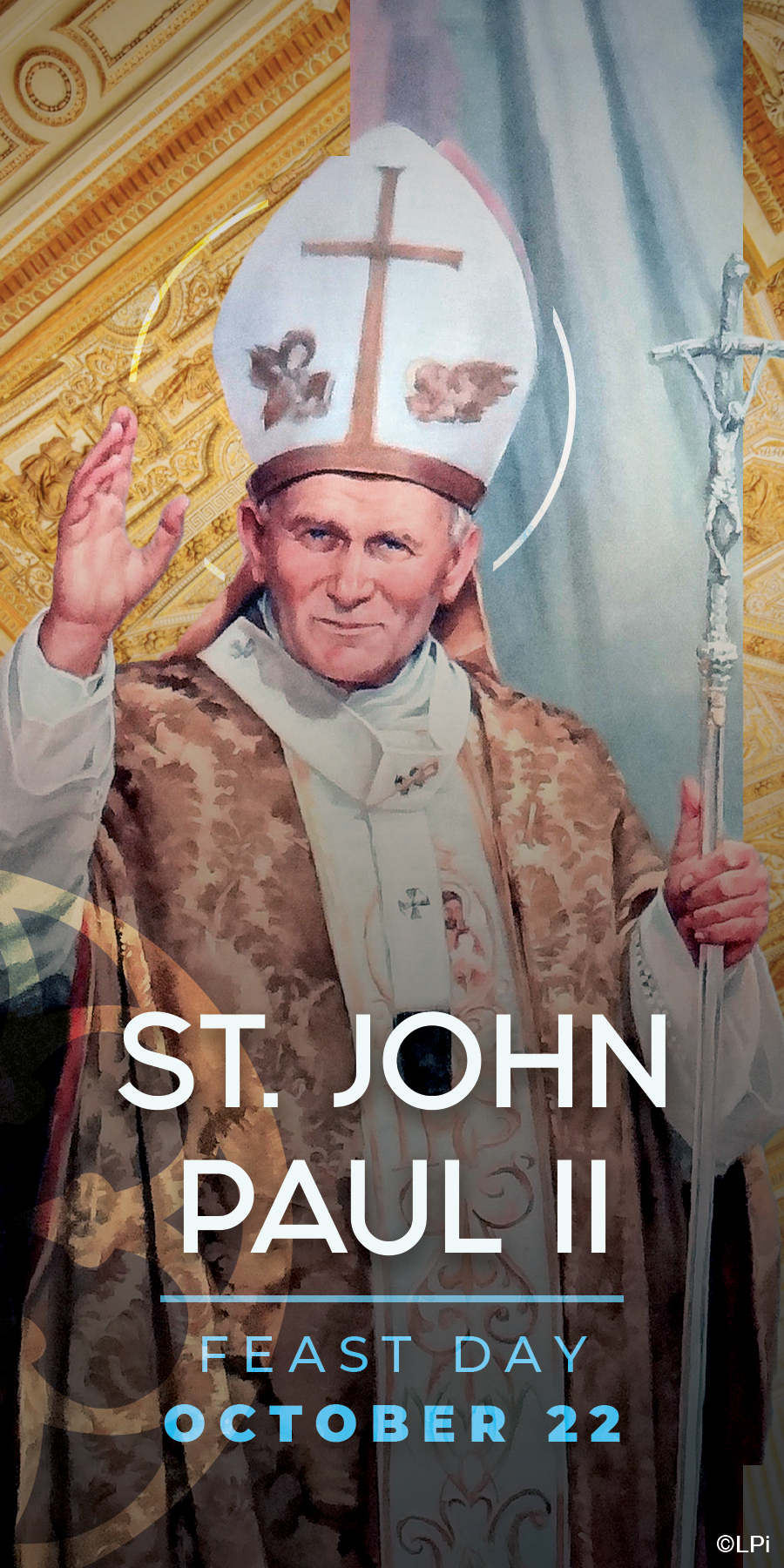
 Wednesday of this week, October 16, marks the 46th anniversary of the Papal election of Karol Wojtyla, known as Pope John Paul II.
He was 58 years old and the first Slav to be elected Pope and youngest elected Pope in a century.
In 26 years, he visited 129 countries, which included seven visits to the United States.
He was the first Pope of modern times to focus on the duty to conserve creation. “The earth will not continue to offer its harvest, except with faithful stewardship. We cannot say we love the land and then take steps to destroy it for use by future generations.”
He reminded leaders of the world that creation is a gift to be stewarded. The earth is “our common home” and we are to tend it with care.
Human beings, beginning with the dawn of the Industrial Age, have abused creation and used it as if humans owned it.
Pope Francis has taken up the environmental teaching of John Pail II and has made it his own as he challenges all of us to do our part in stemming climate change. We are called to embrace the way of “simple living.” We are to reject a “throw away society” in which people seek only what is new and fresh.
Nations are called to initiate efforts at responsible farming that respects the land and sees the produce of the land not as commodities to be bought and sold, but as gifts meant for the sustenance of all people.
What OPEC is to oil, the Twin Cities are to grain. Just as OPEC decides who gets the oil, so we decide who gets the bread.
Pillsbury, Cargill, International Multi Foods, and others are located in Minneapolis, the milling capital of the world.
As a young priest, I participated in a yearlong series of conversations with representatives of these milling empires. The effort was called “The Joseph Project.” The aim of the conversations was to build some understanding about the need to undertake a broader distribution system to use grain to feed the all world.
The discussions were going nowhere; we were not talking the same language. Fr. John McRaith, a priest of the New Ulm diocese, was part of the discussions. John later became the bishop of Owensboro, Kentucky.
One day John came to the meeting and announced: “I now understand! The representatives from the milling companies did not learn their prayers from my mother. She taught us ‘Bless us, O Lord, and these Thy gifts…’ not ‘Bless us, O Lord, and these Thy commodities.”
In caring for creation and the use of the produce of the land, none of us can do everything, but all of us can do something.
Father Steve Adrian

Leave a Comment