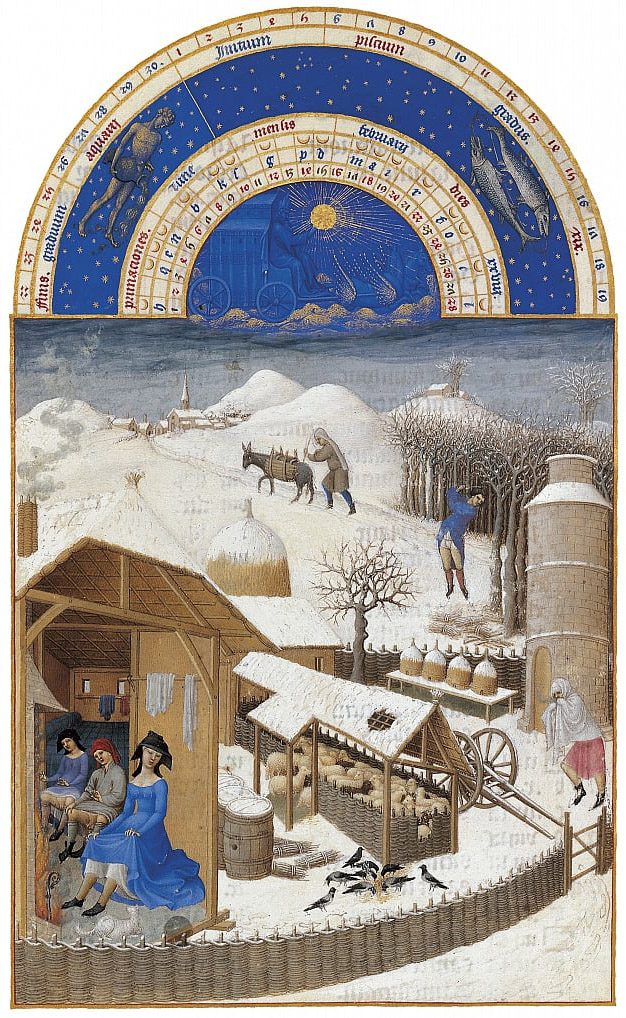
illustration from Les Très Riches Heures du duc de Berry, manuscript illuminated by the Limburg Brothers, 1412.
The earliest record we have of the observance of Advent comes from the 5th century. Just as the season of Lent was the preparation for the Easter Feast, so the season of Advent was the preparation time for the Feast of Christmas.
In both Old Testament times and in the history of the Church, more often than not, agricultural civic events were taken over and imbued with a religious significance.
In northern Europe, the season of Advent began on the feast of Saint Martin of Tours, November 11th. The harvest was in, and weather was turning cold. It was time to take the livestock to slaughter. The produce was stored in barns and meat was either smoked, to preserve it for many months, or eaten rather quickly, lest it spoil. Thus, this period before the Christmas Feast became a time of feasting.
The Church “baptized” this annual harvest observance and instituted the practice of spending a few weeks in prayer anticipating the coming Feast of the Birth of the Savior.
In southern Europe, with a much warmer climate, the time of harvest and taking livestock to market occurred in early December. Here Advent began on the Feast of Saint Nicholas, December 6th.
By 1,000 AD, the observance of Advent, as we know it, was firmly established.
The annual observance of sacred times associated with the Incarnation, Death and Resurrection of Jesus have become standard practice in Christian communities – Lent in preparation for Easter and Advent in preparation for Christmas.
Rather than being caught up in the commercial enterprises of the pre-Christmas time, Advent can be a time to be quiet and reflective; a time to ponder the gratuitousness of a God who chooses to enter fully the human world with all its strengths and weaknesses.
Fr. Steve Adrian
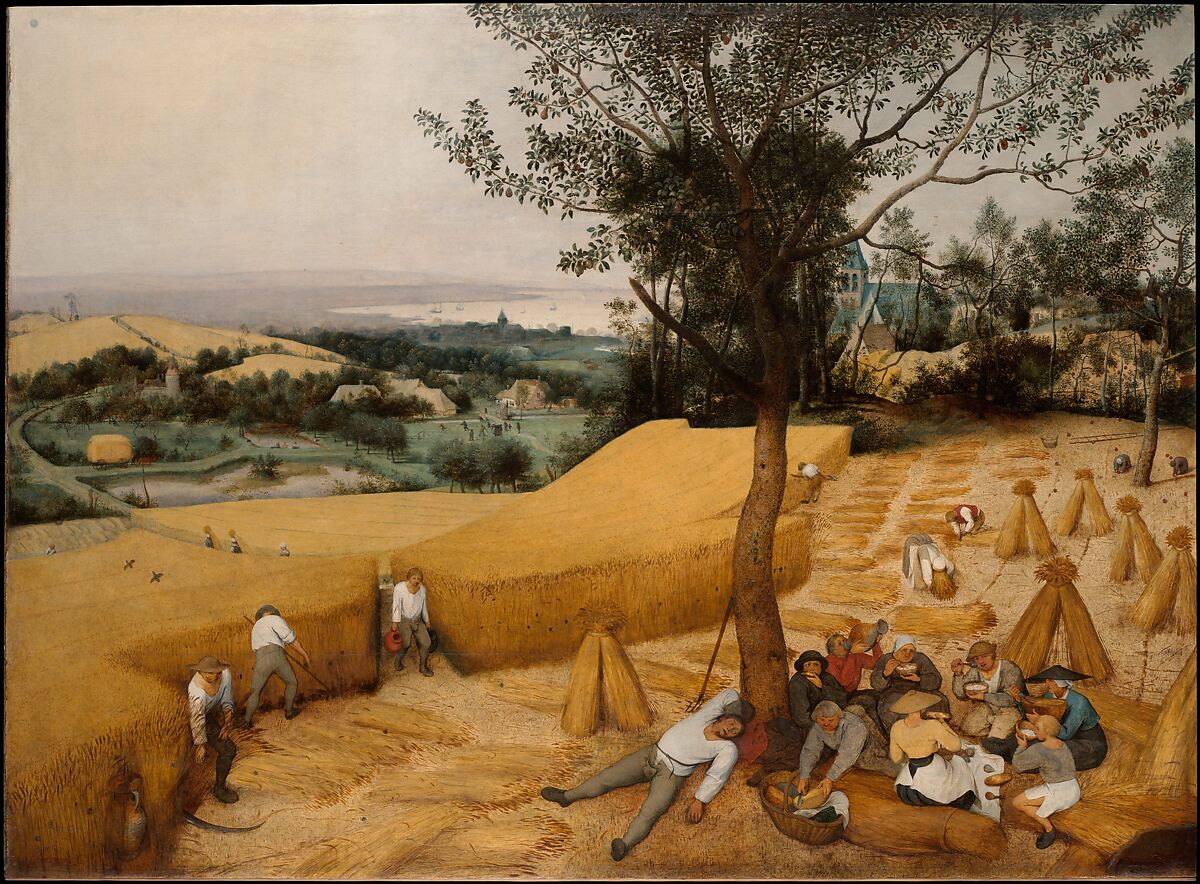
The Harvesters by Pieter Bruegel the Elder (Netherlandish), 1565

Leave a Comment