Fr. Steve Adrian wrote his bulletin reflections in advance. This is the last reflection he wrote before his passing.
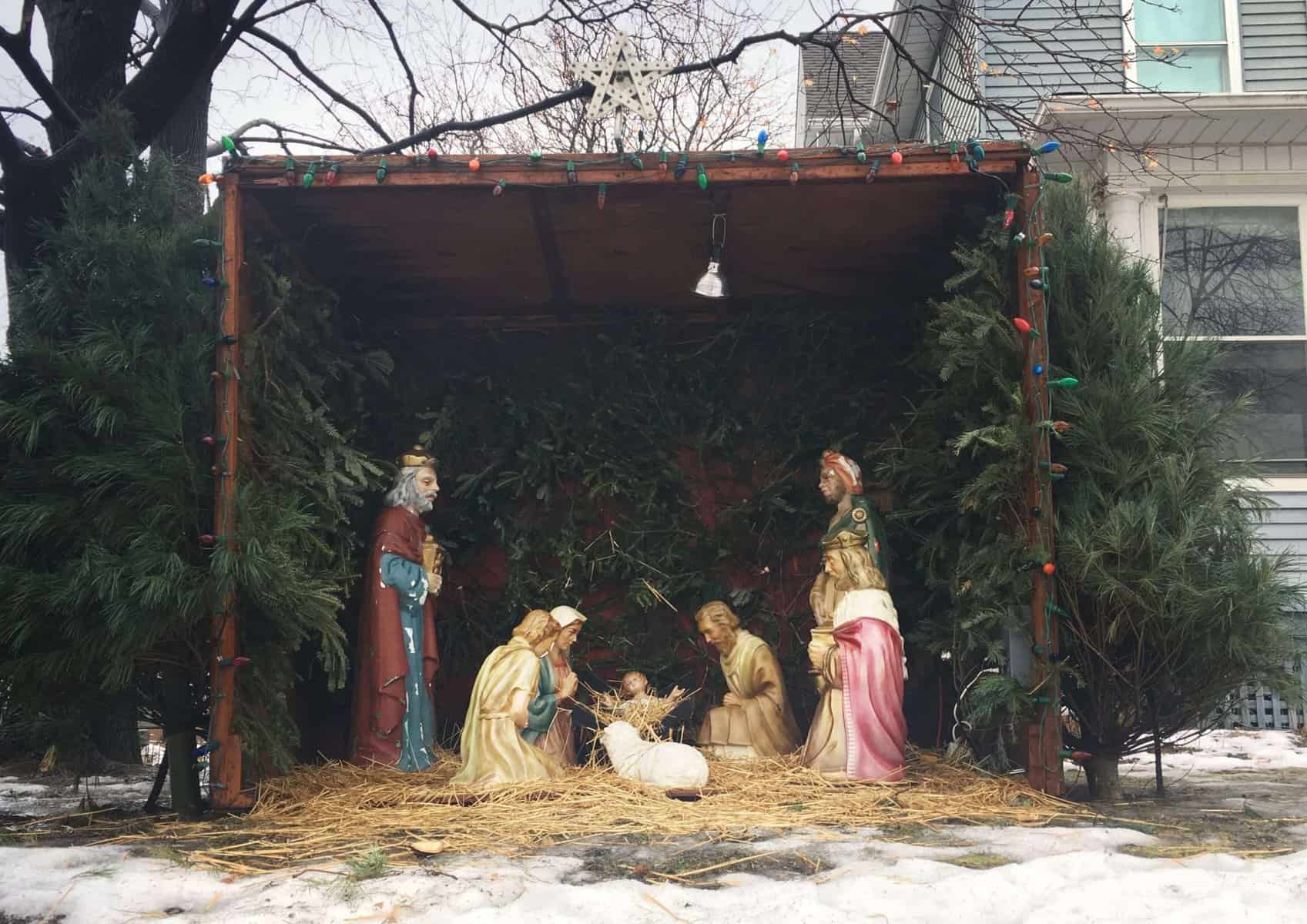
The manger is a significant part of Luke’s one sentence description of the birth of Jesus.
7And she gave birth to her firstborn son and wrapped him in bands of cloth, and laid him in a manger, because there was no place for them in the inn (Luke 2:7).
In the second chapter of Luke, the author mentions the manger three times within nine verses:
12This will be a sign for you: you will find a child wrapped in bands of cloth and lying in a manger’ (2:12). The angel announces the birth of the savior to the shepherds.
16So they went with haste and found Mary and Joseph, and the child lying in the manger’ (2:16). The shepherds find the child.
What does Luke not describe in Chapter 2? There is no mention of animals in the place. Yet, in almost all images of the birth of Jesus, we find the image of an ox and an ass.
The manger is very important for Luke’s Gospel. Luke seeks, throughout this Gospel, to show that the people who should have recognized Jesus did not recognize him—the priests, the scribes and the Pharisees. Those who did recognize Jesus were the poor, the humble, the nameless, and the ignored—symbolized by the shepherds.
All of this is important because of the prophecy of Isaiah.
2 Hear, O heavens, and listen, O earth;
for the Lord has spoken:
I reared children and brought them up,
but they have rebelled against me.
3 The ox knows its owner,
and the donkey its master’s crib;
but Israel does not know,
my people do not understand (Isaiah 1:2-3)
From the very beginning, the artists wanted to make sure that their audience understood the reference to the manger. The manger inaugurates the Gospel According to Saint Luke—the “Gospel of the Poor.”
Thomas Merton, in his first Christmas as a monk at Gethsemane, Kentucky, wrote the following, as recalled in The Seven Story Mountain, his autobiography.
“It is good that somewhere in the world there are people who realize that Christ is born. There were only a few shepherds at the first Bethlehem, and it is the same now. The ox and the ass understood more of the first Christmas than the high priests in Jerusalem. And it is the same today.”
Father Steve Adrian
Pastor Emeritus

Mari says
I find this beautiful. Like a Christmas card from the dearest pastor most of us will ever know.