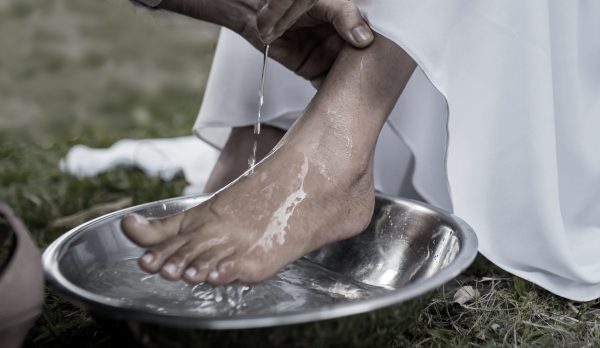
Washing of Feet, Holy Thursday. Credit: Samuel Lima at Pexels.
The tradition of the Washing of the Feet on Holy Thursday tends to make people anxious. People don’t seem to have a problem with washing another person’s feet. The problem is having their own feet washed. Even at the Last Supper, Peter says, “Lord, you will never wash my feet.”
Lent is a time when we are called to acts of service and alms giving. But it’s not often that we stop to reflect on what it means to receive someone else’s act of service. It requires vulnerability, courage and grace. You have to allow your own weaknesses to be exposed. You have to say out loud that you have a need, and you are not currently able to rely on yourself to meet it. Especially in our consumer-capitalist society that venerates independence above all else, it is really hard to accept support.
But Jesus replies to Peter, “Unless I wash you, you will have no inheritance with me.” When we live in a place of pride, thinking we are able to meet all of our needs on our own, we refuse the lesson that Jesus is trying to teach us. And our service to others means nothing if we only serve their transient needs, but do not honor their humanity.
We see ourselves as a social justice parish. Because of this, it is even more important for us to reflect on the difference between serving a meal and sharing a meal, between working at a shelter and knowing the reasons why someone ended up there in the first place, between praying for people who are sick and sitting with them in their pain.
The Washing of the Feet is an opportunity for grace. Let’s continue to challenge each other to enter more deeply into service this Lenten season, but let’s connect more deeply with those we are serving. Participating in the Washing of the Feet is a tangible way to enter into Jesus’ call to be servant-leaders in the community. The greatest must become the least. Jesus humbled himself and became obedient, obedient to death on the cross.

Leave a Comment